


Top Down vs Bottom Up Designs and What They Mean for You – Pixelcarve
Top Down vs Bottom Up Designs and How They Shape Outcomes

Starting a project is more than just writing code or building features. The design structure sets the tone for everything that follows. It can be the difference between smooth execution and costly delays.
According to the Standish Group Chaos Report, 66% of IT projects fail due to unclear design and misaligned structure.
The impact of design choices shows up in three critical areas:
- Cost: Poor structure leads to wasted resources and budget overruns.
- Speed: Clear design accelerates delivery and reduces delays.
- Alignment: Well‑defined structure keeps teams coordinated and focused.
Top‑down and bottom‑up designs represent two fundamentally different paths, each with unique advantages and pitfalls.
Clarity in design direction defines how value is delivered at every layer of your product. Choosing a structure isn’t simply a matter of preference; it’s a strategic business decision. Teams need clarity on where to begin, how decisions propagate, and how iterations will unfold..
Curtis Priest, CEO of Pixelcarve, says:
“Design with your audience in mind, using data to understand what they actually want.”
This blog explores top‑Down vs bottom‑up designs, their practical applications, and how to select the right model to guide your project toward success.
Top‑Down vs Bottom‑Up Designs at a Practical Level
Top‑down and bottom‑up designs guide projects in very different ways.
- In top‑down design, you begin with the end goal. Decisions flow from the high‑level vision down to individual components.
- In bottom‑up design, you start with the pieces, features, modules, or assets, and integrate them into the larger system.
Neither model fits all projects. High‑complexity systems like enterprise platforms often benefit from top‑down design, where structure and predictability are critical.
Experimental or iterative projects lean on bottom‑up design for flexibility and rapid adaptation. Websites, apps, and digital tools can adopt either approach, or even a hybrid, depending on workflow and goals.
How Does This Apply to Website Design?
Website projects are a perfect example of how these models play out:
- Top‑Down Website Design:
- Start with the overall vision — brand identity, user journey, and business goals.
- Define site architecture, navigation flow, and page hierarchy first.
- Individual pages and components (like forms or widgets) are then built to serve that overarching vision.
- Best for corporate sites, e‑commerce platforms, or organizations needing consistency and scalability.
- Bottom‑Up Website Design:
- Begin with specific elements — a homepage layout, a blog module, or a product gallery.
- Assemble these pieces into a larger site structure.
- Allows for experimentation and quick iteration, especially in creative projects or startups testing ideas.
- Best for portfolios, campaign sites, or projects where flexibility and speed matter more than rigid structure.
- Hybrid Approach:
- Many modern websites blend both models. For example, a top‑down framework defines navigation and branding, while bottom‑up experimentation shapes interactive features or content modules.
| Turn design strategy into measurable outcomes! Align structure with business goals and avoid design decisions that create friction across teams and platforms. Build My High-Performing Site |
What Is a Top‑Down Design and How Teams Apply It
Top‑down design starts with the final product and works backward to define components. Your team identifies key objectives first, then breaks the system into smaller, manageable pieces.
- Planning: Early planning ensures all parts align with the end goal.
- Ownership: Teams know what they own and how it fits into the bigger picture.
- Reduced rework: Fewer surprises emerge since high‑level decisions guide all detailed work.
This method is particularly effective for complex websites or platforms where clarity and scope control are crucial. For example, a corporate website or e‑commerce platform benefits from top‑down design because the site architecture, navigation, and branding must be defined before building individual pages or modules.
Top‑Down vs Bottom‑Up Design in Early Planning
Early planning reveals the contrast between the two approaches:
- Top‑Down Design: Scope is set first. Assumptions are made early, guiding resources and timelines. This reduces uncertainty but requires strong upfront clarity.
- Bottom‑Up Design: Assumptions are delayed. Components evolve organically, and the system emerges from tested parts. This increases flexibility but can make timelines less predictable.
In website design, top‑down planning works well when building sites with strict compliance, branding, or scalability requirements. Bottom‑up planning suits creative projects, campaign sites, or startups where experimentation drives the design.
Bottom‑Up Design and How It Grows Systems from Parts
Bottom‑up design begins with components. Teams build, test, and iterate until small modules emerge into a complete system.
- Iterative building: Each part is functional before integration.
- Flexibility: Changes are easier since the system evolves organically.
- Experimentation: Teams can try new solutions without disrupting a fixed hierarchy.
This model works well when outcomes are uncertain or when multiple ideas need testing in parallel.
In website design, bottom‑up approaches are common in portfolio sites, prototypes, or creative campaigns, where designers experiment with layouts, features, and user flows before committing to a full structure.
| More articles you might like: The Importance of Website Security The Hidden Cost of Neglecting Your Website Website Structure Analysis: How to Visualize your New Website |
Bottom‑Up vs Top‑Down When Ideas Are Still Forming
Exploration favors bottom‑up design. Teams adapt as new feedback enters, distributing risk and shaping the system through experimentation. Top‑down design is less forgiving at this stage, since early assumptions can lock in a structure that resists change.
For website design, bottom‑up is ideal during early prototyping or A/B testing, where user feedback drives adjustments. Top‑down is better once the vision is clear. For example, when building a large platform that must scale consistently across multiple user groups.
Top‑Down vs Bottom‑Up Design in Digital Experiences
Digital systems highlight the difference between these two approaches, especially in website projects. The way navigation, content, and user experience are structured depends on whether you begin with the big picture or build from individual components.
- Navigation: Top‑down maps categories first, while bottom‑up navigation emerges from content blocks.
- Content structure: Top‑down favors hierarchical pages; bottom‑up builds modular, reusable sections.
- UX clarity: Top‑down often ensures a clean, predictable path, while bottom‑up allows adaptive flows that evolve with user needs.
Your choice directly affects long‑term scalability. Top‑down design provides predictable paths and stability, while bottom‑up design supports continuous expansion and content experimentation, ideal for websites that evolve rapidly with new features or campaigns.
Top‑Down Designs vs Bottom‑Up Designs for Large Teams
Team size changes the way these models play out. Larger groups face challenges in coordination, ownership, and communication, and the design approach can either reduce or amplify friction.
- Collaboration: Top‑down requires centralized alignment, while bottom‑up encourages local autonomy.
- Handoffs: Top‑down creates clear ownership of tasks; bottom‑up relies on iterative feedback loops.
- Friction points: Misaligned teams in top‑down can block progress, while bottom‑up risks incoherent integration without strong coordination.
For businesses managing large website projects, blending approaches often works best. A top‑down framework ensures consistent branding and navigation, while bottom‑up methods empower teams to experiment with layouts, modules, or interactive features. This hybrid model balances speed, clarity, and coordination.
Top‑Down vs Bottom‑Up Designs and SEO Impact
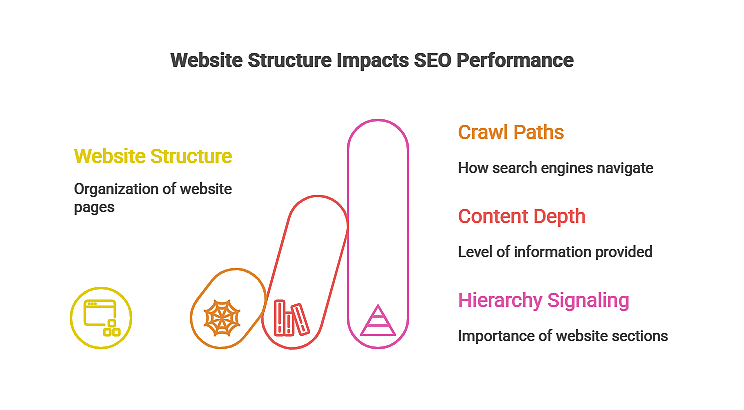
Website structure directly influences SEO performance. The way pages are organized and linked determines how search engines crawl and index your site.
- Crawl paths: Top‑down hierarchies guide search engines through clear, predictable structures.
- Content depth: Bottom‑up supports rich, modular content that expands organically.
- Hierarchy signaling: Clear navigation and internal linking improve discoverability and ranking.
A well‑structured website often merges both approaches, giving users a seamless path to explore content while ensuring search engines can efficiently index every page.
Bottom‑Up vs Top‑Down in Real Project Timelines
Design choices also affect how projects unfold over time. Speed, stability, and cost implications vary depending on whether you start with the big picture or build from individual components.
- Early momentum: Bottom‑up allows teams to move fast with visible components.
- Long‑term stability: Top‑down reduces surprises during scaling.
- Cost implications: Errors in top‑down early are cheaper to fix, while iterative mistakes in bottom‑up may compound if not integrated carefully.
Understanding these trade‑offs helps set realistic timelines and budgets, ensuring projects balance speed with sustainability.
Choosing Between Top‑Down and Bottom‑Up Designs
The right approach depends on your project goals. Consider the following factors before deciding:
- Complexity of the system
- Team size and skills
- Flexibility needs
- Desired timeline
In many cases, hybrid approaches deliver the best results. A top‑down framework provides structure and alignment, while bottom‑up methods keep components flexible and adaptable. Together, they allow teams to benefit from early clarity and iterative growth simultaneously.
Key Differences in the Application of Top Down Design vs Bottom Up Design
When deciding between top‑down and bottom‑up design, it helps to see the distinctions side by side. Each approach carries unique strengths and risks, and hybrid models often combine the best of both.
| Aspect | Top‑Down Design | Bottom‑Up Design | Hybrid Approach |
| Starting Point | End goal first | Individual parts first | Core goals + iterative parts |
| Planning | High‑level first | Low‑level first | Medium‑level, iterative adjustments |
| Flexibility | Low early, higher later | High throughout | Balanced |
| Team Fit | Large, coordinated | Smaller or experimental | Mixed‑size teams |
| Risk | Early assumption risk | Integration risk | Managed risk via structure + iteration |
| SEO/Content | Predictable hierarchy | Modular content depth | Structured + modular |
This quick reference highlights how each model aligns with different project types and outcomes. By comparing starting points, planning styles, flexibility, and SEO impact, you can choose the design approach that best matches your project goals. Hybrid strategies often deliver the most balanced results, blending structure with adaptability..
Balance Structure and Flexibility in Your Next Digital Project With Pixelcarve
Top‑down vs bottom‑up designs directly shape your project’s cost, speed, and clarity. Choosing the right structure sets your team up for smooth execution and predictable outcomes. For digital experiences, combining both approaches often delivers the strongest results.
Pixelcarve brings proven expertise to this balance. With 27 years of experience creating premium websites for Fortune 500 clients, we’ve earned recognition from the Webby Awards and the International Academy of Visual Arts for design excellence. Our structured approach ensures clarity while supporting innovation in every project.
Partnering with Pixelcarve means you gain:
- Design clarity that reduces risk and rework.
- Innovation support through flexible, adaptive workflows.
- Award‑winning expertise trusted by global brands.
- Measurable outcomes that elevate your digital presence.
Contact us today to explore how top‑down and bottom‑up design strategies can transform your website or platform. Schedule a consultation and see how our team can turn your vision into a high‑performing digital experience.
- Website Maintenance Checklist Every Premium Site Needs in 2026 – Pixelcarve
- Web Design Guidelines That Improve User Experience and Accelerates Business Growth – Pixelcarve
- The Ontario WordPress Advisory Is a Good Reminder: Websites Need Ongoing Care
- Website Maintenance Cost Guide for Small and Large Sites – Pixelcarve
- How Much Does a Website Cost? The Real Price of Great Design – Pixelcarve
