


Website Maintenance Cost Guide for Small and Large Sites – Pixelcarve
Website Maintenance Cost and How It Impacts Your Business


67% of businesses say their revenue took a hit from underperforming websites. As Curtis Priest, CEO of Pixelcarve, shared in a LinkedIn article: “A high‑performing website isn’t a one‑time project, it’s a living, breathing part of your business.”
You’ve built your website. It looks great. But the work doesn’t end there. Every day without proper maintenance exposes you to security threats, slower performance, and frustrated visitors who may never return. That’s why understanding website maintenance costs is critical for anyone with an online presence.
In this guide, we’ll break down:
- The key drivers of maintenance costs and what they really cover.
- Monthly averages you can expect across different types of websites.
- Practical strategies to plan for expenses without wasting resources.
By the end, you’ll know exactly how much it costs to maintain a website, and how to budget smartly so your site stays secure, fast, and effective.
What Factors Influence Website Maintenance Costs?
Website maintenance costs vary widely, and understanding the drivers behind them helps you plan realistically. Several elements shape your monthly or yearly expenses:
- Site type: A personal blog requires minimal updates, while a corporate site or ecommerce platform demands complex integrations, robust security, and frequent content changes.
- Complexity: Custom features, interactive modules, or high traffic volumes increase the need for technical skill and time, driving costs higher.
- Technology stack: Open‑source platforms like WordPress reduce licensing fees but require you to manage updates, backups, and security. Managed platforms charge more but consolidate services, lowering technical risks.
To put this into perspective:
- A 5‑page personal blog may cost around $20/month for basic hosting and updates.
- A corporate site with 50+ pages, multiple integrations, and heavy traffic can reach $1,000/month or more.
Even small decisions, such as adding or limiting plugins or choosing a managed hosting plan, can significantly influence your monthly maintenance costs.
| Make Website Downtime a Thing of the Past! Protect your brand and visitors with expert-led maintenance and clear monthly cost planning. Power Up My Site |
Core Components of Website Maintenance Costs
Breaking down costs clarifies what you’re really paying for. Each element adds up, and knowing the ranges helps you plan ahead.
- Domain name is your website’s address. Registration averages $10–$60 per year, with privacy protection adding another $10–$20. Premium domains can cost much more, but renewal fees usually match registration costs.
- Web hosting stores your site files and delivers them to visitors. Shared hosting runs about $5–$15 per month for small sites, VPS or cloud hosting ranges $20–$300 per month for medium to high traffic, and dedicated servers can reach $500–$1,500 per month for enterprise‑level sites.
- SSL certificates encrypt user data. Basic SSL is often free, while advanced certificates for ecommerce or enterprise sites range from $50–$500 per year.
- Email services tied to your domain improve professionalism. Options like Google Workspace or Microsoft 365 average $6–$12 per month per mailbox.
- CMS updates prevent vulnerabilities and keep features working. Free platforms may require manual upkeep, while paid CMS plans can cost $20–$200 per month depending on customization.
- Plugins and extensions enhance functionality but add maintenance tasks. Free options exist, while premium plugins average $5–$100 per year. Too many plugins can cause conflicts, sometimes requiring professional help.
- Design and UX adjustments directly affect engagement. Minor layout tweaks may cost $100–$500, while full redesigns can exceed $5,000. Mobile responsiveness and page speed improvements also factor into ongoing costs.
- Security monitoring and backups are non‑negotiable. Automated backups, malware scans, and firewall monitoring typically cost $20–$500 per month.
- Marketing and SEO ensure visibility. Hiring an SEO specialist, running campaigns, and maintaining keyword strategies can range from $50–$500 per month depending on your goals and site complexity.
- Add Monitoring and Reporting
Website maintenance costs scale with the size and complexity of your site. A simple blog may only need domain, hosting, and basic security, while a corporate or ecommerce site requires investment across design, SEO, and advanced hosting.
Planning for these components upfront helps you avoid hidden expenses and keep your site secure, fast, and effective.
| More articles you might like: The Importance of Website Security The Hidden Cost of Neglecting Your Website Website Structure Analysis: How to Visualize your New Website |
Website Maintenance Cost Per Month by Type of Website
Monthly maintenance averages differ depending on the type of website, and these estimates provide a useful guide for budgeting.
- Personal blogs often cost between $5–$75 per month, covering simple hosting, occasional updates, and minimal plugins.
- Small business websites typically range from $35–$500 per month, with expenses tied to basic ecommerce features, content updates, and minor design adjustments.
- Corporate websites can go up to $1,000 per month, reflecting the need for multiple pages, custom integrations, and advanced security.
- Ecommerce websites are the most demanding, averaging $750–$5,000+ per month due to payment processing, inventory updates, and enhanced security requirements.
For example, a small business site with 10 pages, a blog, and basic ecommerce functionality may cost around $500 per month for ongoing maintenance. This figure usually covers hosting, security, maintenance, and monitoring.
DIY vs Professional Cost of Website Maintenance
When it comes to upkeep, you can either manage maintenance yourself or hire experts. Each option has trade‑offs.
DIY maintenance keeps monetary costs low and gives you full control. You handle updates, backups, and minor changes directly.
- Pros: Minimal fees, direct oversight.
- Cons: Requires technical skill, time‑intensive, and mistakes can break your site or reduce performance.
Professional maintenance comes at a higher cost but offers expert care. Full‑service agencies charge $150–$500 per month for basic packages, while complex sites may exceed $1,000 per month.
- Pros: Expert monitoring, time‑saving, proactive issue resolution.
- Cons: Higher cost, less direct control.
It’s also important to factor in hidden costs such as plugin conflicts, emergency fixes, downtime, or SEO losses from outdated pages. DIY carries risk, while professional services provide reliability and compliance that safeguard your site’s long‑term performance.
How to Reduce the Cost of Website Maintenance Without Cutting Quality
Reducing website maintenance costs doesn’t mean sacrificing functionality. With a few smart choices, you can keep your site secure, fast, and effective while staying within budget.
Practical strategies include:
- Using free tools where possible, such as SSL certificates or basic plugins.
- Limiting unnecessary plugins and extensions to avoid conflicts and extra upkeep.
- Selecting reliable hosting to prevent downtime charges and performance issues.
- Scheduling content updates efficiently to reduce repetitive labor.
- Negotiating bundled packages with agencies that combine hosting, support, and maintenance.
Planning Your Website Maintenance Budget
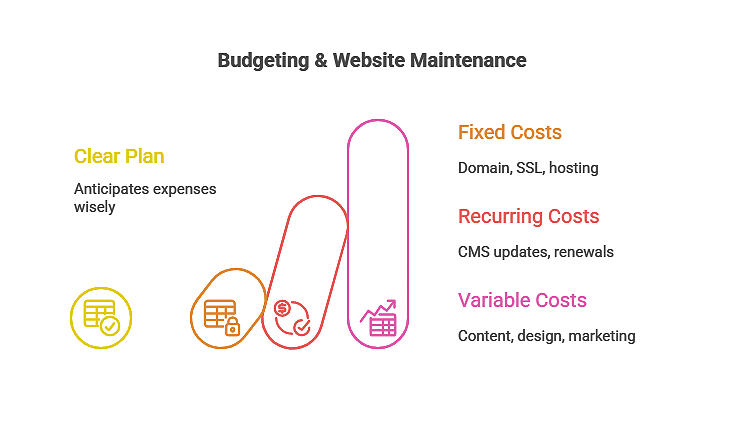
Budgeting is the key to avoiding surprises. A clear plan helps you anticipate expenses and allocate resources wisely.
Think of costs in three categories:
- Fixed costs such as domain registration, SSL certificates, hosting, and email services.
- Recurring costs like CMS updates, plugin renewals, and backups.
- Variable costs including content creation, design tweaks, and marketing campaigns.
It’s also important to consider seasonal peaks. Ecommerce sites often need extra support during holidays, when traffic and transactions surge.
Allocating funds for security and emergency maintenance ensures you’re prepared for unexpected issues. Smart planning prevents costly reactive fixes and keeps your website running smoothly year‑round.
Common Misconceptions About Website Maintenance Costs
Debunking myths helps prevent budget mistakes and ensures you plan realistically:
Myth 1: Small sites don’t need maintenance
- Even a five‑page blog risks hacking attempts and SEO penalties if updates are ignored.
Myth 2: Free hosting and DIY means no cost
- Hidden expenses quickly add up. Downtime, manual updates, and plugin conflicts can drain time and money.
Myth 3: Maintenance is optional until something breaks
- Waiting until problems arise often costs two to three times more than proactive upkeep.
Understanding these misconceptions saves money, protects credibility, and keeps your site running smoothly.
Website Maintenance Cost: Comparison by Platform Features
Some costs are often overlooked. Here’s a table showing estimated average costs for additional features across different types of websites:
| Feature | Small Blog | Small Business | Corporate Site | Ecommerce Site |
| Automated Backups | $5–$20/month | $20–$50/month | $50–$150/month | $50–$200/month |
| Security Monitoring | $0–$10/month | $15–$50/month | $50–$200/month | $50–$250/month |
| Plugin/Extension Costs | $0–$5/month | $5–$20/month | $20–$100/month | $20–$150/month |
| Content Updates | $0–$50/month | $25–$150/month | $100–$500/month | $100–$600/month |
These figures are average estimates. They demonstrate how layered costs impact website maintenance depending on your site type. Planning with these variables in mind improves efficiency and reduces unexpected expenses.
Keep Your Website Strong with Pixelcarve
As Curtis Priest says in his article “The “launch and leave it” approach is one of the biggest threats to your digital presence.”
A website does not fail because of one big mistake. It fails through neglect, shortcuts, and unclear ownership of ongoing care. Website maintenance cost varies by site size, features, and technology. The real risk comes from treating those costs as optional instead of planned.
Pixelcarve approaches website maintenance from a value lens. You invest in performance, stability, and clarity around where every dollar goes.
As a pure-play website design and development agency, Pixelcarve builds and supports websites that drive engagement and real business results.
We bring proven experience and industry recognition that reinforces long-term value:
- Worked with 20+ Fortune 500 companies, delivering complex, high-stakes websites that demand reliability and precision.
- 27 years of continuous experience, supporting premium brands through evolving platforms, design standards, and technical shifts.
- Recognized by leading industry bodies, including the Webby Awards, International Academy of the Visual Arts, Legal Marketing Association, Clutch, and others.
Your website represents your brand every day. Pixelcarve helps you protect that investment with thoughtful planning and disciplined execution. Contact us today to schedule a consultation and build a maintenance strategy that delivers lasting value without waste.
- Website Maintenance Checklist Every Premium Site Needs in 2026 – Pixelcarve
- Top Down vs Bottom Up Designs and What They Mean for You – Pixelcarve
- Web Design Guidelines That Improve User Experience and Accelerates Business Growth – Pixelcarve
- The Ontario WordPress Advisory Is a Good Reminder: Websites Need Ongoing Care
- How Much Does a Website Cost? The Real Price of Great Design – Pixelcarve
