


How Web Design Helps Businesses Strengthen Their Digital Presence – Pixelcarve
Why Websites are Important to Business Success


Your customers judge your business in seconds, which is exactly how web design helps businesses, by shaping that first impression before a single word is read. If your site feels outdated or clunky, they’ll click away. That lost attention translates directly into lost revenue.
According to Stanford’s Web Credibility Research, 75% of users assess a company’s credibility based on its website design.
It’s not enough to just have a website. Is the design ‘brand worthy’? Curtis Priest, CEO of Pixelcarve, shares in a Forbes release: “A smooth, intuitive site isn’t just good for UX; it also builds trust and keeps people coming back for more.”
In this blog, we’ll go into how intentional web design becomes a growth engine, fueling trust, visibility, and conversion in ways that directly impact your bottom line.
The Importance of a Website for Small Businesses
The purpose of a website has evolved far beyond listing contact details or company history. Today, it’s your digital headquarters. Think of it as your central hub for engagement, education, and conversion.
Customers arrive with expectations shaped by the sleek experiences they get from premium brands, and they judge yours in seconds. Every company you compete with is investing in digital. If your site feels outdated, prospects assume the same about your products or services.
Here’s what a modern website must deliver:
- Credibility at First Glance: First impressions happen in milliseconds. A polished design signals professionalism and builds trust instantly.
- Brand Alignment: Your site should consistently and confidently reflect your brand’s tone, values, and visual identity.
- Conversion Power: Design isn’t decoration. It’s a strategic tool that guides users toward action, whether that’s a purchase, inquiry, or signup.
- User Experience: Smooth navigation, fast load times, and mobile responsiveness aren’t optional. In fact, they’re expected.
A well-designed website performs. It sets the tone for every interaction that follows and becomes the foundation of your digital credibility.
| Turn Clicks Into Clients With Smarter Web Design Your site is your first impression. Make it count with modern, fast, and results-driven design. Learn More |
The Importance of a Great Website for Brand Identity
Why are websites important? Your website is often the first branded experience a prospect has with your business. A unified brand style reinforces your values, creates recognition, and sets the stage for customer experiences.
The reason your business needs a website becomes especially clear when you consider how design influences perception:
- For small firms: A professional website signals legitimacy and trustworthiness.
- For larger firms: It reflects sophistication and alignment with corporate identity.
- For all businesses: Typography, color palettes, imagery, and layout communicate subtle cues that either elevate your brand or dilute it.
A strong design makes your brand identity tangible. It translates mission and vision into something customers can feel and connect with. Without that visual connection, your story risks falling flat.
Crafting Visual Consistency
Visual consistency builds familiarity and reinforces credibility. When fonts, icons, and colors work together seamlessly, visitors see a brand that’s intentional and reliable.
Here’s what great design delivers:
- Deeper Trust: Cohesive visuals signal professionalism and care.
- Higher Retention: Customers stay longer when the experience feels familiar and intuitive.
- Better Recall: Memorable design makes your brand easier to recognize and revisit.
The Benefits of Having a Website for Small Businesses
For smaller companies, the advantages of a website go far beyond cost savings. Unlike physical locations, your website is open 24/7, always accessible, always working. That constant availability puts your products, services, and message in front of prospects whenever they’re ready to engage.
Credibility is another major factor. Customers rarely trust businesses without a professional online presence. A clean, functional site with intuitive navigation instantly sets you apart from competitors still relying on word of mouth.
Here’s what a well-designed website delivers:
- Round-the-Clock Visibility: Your business is discoverable anytime, anywhere, without the overhead of physical space.
- Instant Credibility: A polished site signals professionalism and builds trust from the first click.
- Improved Conversions: Smart design anticipates user needs, answers questions quickly, and guides visitors toward action.
- Scalable Reach: Your website broadens your market far beyond local boundaries, enabling you to grow without limits.
Simply, it’s trust, reach, and conversion rolled into one digital asset that works while you sleep.
Why Businesses Need a Website to Stay Competitive
User expectations are rising fast. According to Think with Google, 53% of mobile users abandon a site if it takes longer than three seconds to load. That’s a clear signal of why businesses need a website designed for speed, clarity, and performance.
To stay competitive, your site must deliver:
- Fast Load Times: Speed is non-negotiable. Slow sites lose visitors and revenue.
- Mobile Responsiveness: Customers expect seamless experiences across devices.
- Clear Navigation: If users can’t find what they need, they’ll find it elsewhere.
- Barrier-Free Engagement: Your competitors are removing friction. You should too!
Falling behind is costly. A high-performing website keeps your business relevant, visible, and ready to scale.
| More articles you might like: The Importance of Website Security The Hidden Cost of Neglecting Your Website Website Structure Analysis: How to Visualize your New Website |
How Web Design Boosts SEO and Visibility
Search visibility starts with structure. A well-designed site helps search engines understand your content, while poor layouts bury it. On-page elements such as responsive design, clear hierarchy, and intuitive navigation signal relevance and usability.
Page speed is another critical driver. Lightweight coding, optimized images, and modern layouts improve performance, and that translates directly into higher search rankings. The answer to why websites are important often comes back to visibility. If people can’t find you, your site can’t deliver value.
Design doesn’t replace SEO, but it powers it. Search engines reward usability, and usability starts with design quality.
Technical Factors That Shape Success
Technical performance plays a massive role in visibility. Mobile-first indexing means your mobile site is now the primary version search engines evaluate. Google’s Core Web Vitals confirm that a better user experience leads to better rankings.
Here’s how design supports SEO success:
- Responsive Design: Ensures your site adapts seamlessly across devices, improving usability and search performance.
- Fast Load Times: Speed matters! Slow sites lose visitors and ranking potential.
- Structured Navigation: Clear menus and page hierarchy help search engines crawl and index your content effectively.
- Optimized Visuals: Efficient image formats and layout choices reduce load strain and enhance engagement.
- Balanced Aesthetics and Functionality: Design should look good but also work fast and intuitively.
The businesses that win online are those that understand beauty and performance must work together.
The Importance of a Good Website for User Experience
People visit websites with intent; they’re looking for answers, solutions, or next steps. That’s why user experience is central to the importance of a good website. The layout should guide, not confuse.
Every interaction should feel effortless, purposeful, and aligned with what the visitor came to do. Design plays a functional role in shaping that experience. It’s not all about aesthetics, but the clarity and flow.
Here’s what elevates user experience beyond the basics:
- Logical Pathways: Visitors should move through your site without friction. Menus, buttons, and page structure must support natural decision-making.
- Content Prioritization: Key information should be front and center, not buried behind clicks or jargon.
- Microinteractions: Subtle design cues such as hover effects, animations, and feedback loops help users feel in control and informed.
Accessibility and Inclusivity
Modern websites must serve everyone. Accessibility is a responsibility. Inclusive design ensures that users with different abilities, devices, and contexts can engage without barriers.
Here’s how inclusive design creates meaningful impact:
- Expanded Reach: Supporting assistive technologies opens your business to wider audiences.
- Ethical Alignment: Inclusive design shows that you respect users with different needs. You demonstrate fairness when your site works for people who rely on keyboard navigation, screen readers, or adaptable text.
- Operational Strength: Sites built with accessibility in mind tend to be more robust, scalable, and future-proof.
Beyond ease, user experience is about respect. When your website adapts to the needs of real people, it becomes a tool for conversion and ultimately, a lasting connection.
Conversions and Revenue Gains From Strong Design
A visually appealing site that doesn’t convert is just window dressing. Strong design earns trust, but more importantly, it guides visitors toward meaningful action. When layout, messaging, and user flow are aligned with intent, conversion rates climb.
Here’s what drives results:
- Strategic Placement of CTAs: Calls to action should be strategically placed where users are most ready to engage.
- Clear, Compelling Messaging: Every word should reinforce value and reduce hesitation.
- Intent-Driven Layouts: Design should anticipate user behavior and remove decision fatigue.
Conversion is not accidental; rather, it is tactfully engineered. When every visual element supports a business goal, revenue follows.
The Connection Between Web Design and Business Growth
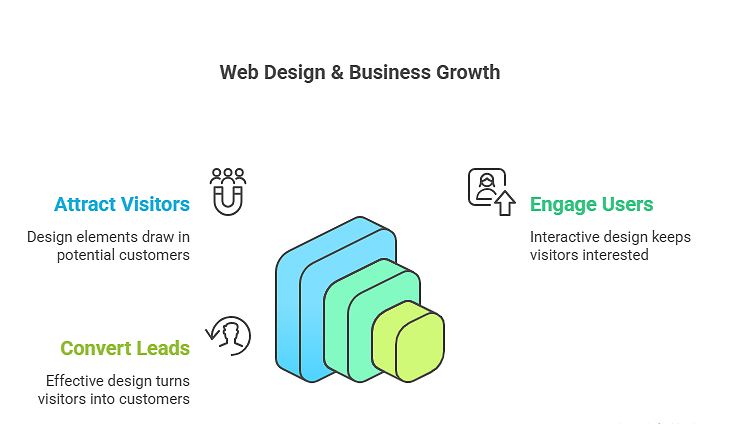
Growth stems from consistent lead generation and sales. The link between design and business performance lies in how well your site attracts, engages, and converts visitors.
Each interaction either builds momentum or creates friction. Design that removes barriers and supports user flow becomes a catalyst for growth.
Here’s what effective design delivers:
- Higher Traffic: Optimized pages attract more visitors through search and referrals.
- Better Engagement: Intuitive design keeps users exploring longer.
- Improved Conversion Rates: Seamless experiences turn interest into action.
This is how web design helps businesses thrive over time. Your site becomes a growth engine, not a static brochure.
Why Your Business Needs a Website That Works
Your website is your most visible asset in the digital marketplace. It reflects your brand, supports your strategy, and influences every stage of the customer journey.
Here’s why performance matters:
- Brand Representation: Your site shapes perception before a single conversation happens.
- Search Visibility: Design impacts how easily customers find you online.
- User Experience: Smooth navigation and fast load times keep visitors engaged.
- Revenue Impact: Every design choice affects conversion—and conversion drives growth.
In the words of Curtis Priest, “Design isn’t a one-and-done initiative.” Continuous refinement keeps your business relevant, competitive, and conversion-ready.
Key Website Design Factors That Impact Business Value
Design is multi-dimensional. To give you another layer of insight, here’s a breakdown of core factors that impact business value.
Each element plays a role in how your website ultimately shapes results.
| Website Factor | Business Impact | Why It Matters |
| Content Hierarchy | Improves readability and guides user focus | Keeps visitors engaged and leads them toward conversion |
| Security Features | Protects customer data | Builds trust and meets compliance standards |
| Interactive Elements | Increases engagement | Encourages visitors to spend more time on the site |
| Analytics Integration | Tracks visitor behavior | Provides data for ongoing improvements |
| Multilingual Support | Expands audience reach | Connects your business with global prospects |
Each of these factors ties back to how you present your business online. Strong design choices in these areas can add measurable value across visibility, trust, and revenue.
Partner With Pixelcarve for Premium Web Design
Your website is the most powerful tool for building credibility, driving visibility, and accelerating growth. The importance of a good website touches every layer of business success, from first impressions to bottom-line results.
With over 20 years of experience, Pixelcarve has helped more than 20 Fortune 500 companies elevate their digital presence. Recognized by the Webby Awards, the Legal Marketing Association, and other industry leaders, our work blends creative excellence with strategic performance.
We don’t just design websites; we craft platforms that deliver measurable impact. If you’re ready to build a site that reflects your brand, engages your audience, and fuels long-term growth, let’s talk.
Schedule your consultation with Pixelcarve today and take the next step towards building a website that turns visitors into loyal customers.
- Website Maintenance Checklist Every Premium Site Needs in 2026 – Pixelcarve
- Top Down vs Bottom Up Designs and What They Mean for You – Pixelcarve
- Web Design Guidelines That Improve User Experience and Accelerates Business Growth – Pixelcarve
- The Ontario WordPress Advisory Is a Good Reminder: Websites Need Ongoing Care
- Website Maintenance Cost Guide for Small and Large Sites – Pixelcarve
